UK Casino Self-Exclusion Rules and Gambling Account Protection
 Available in GB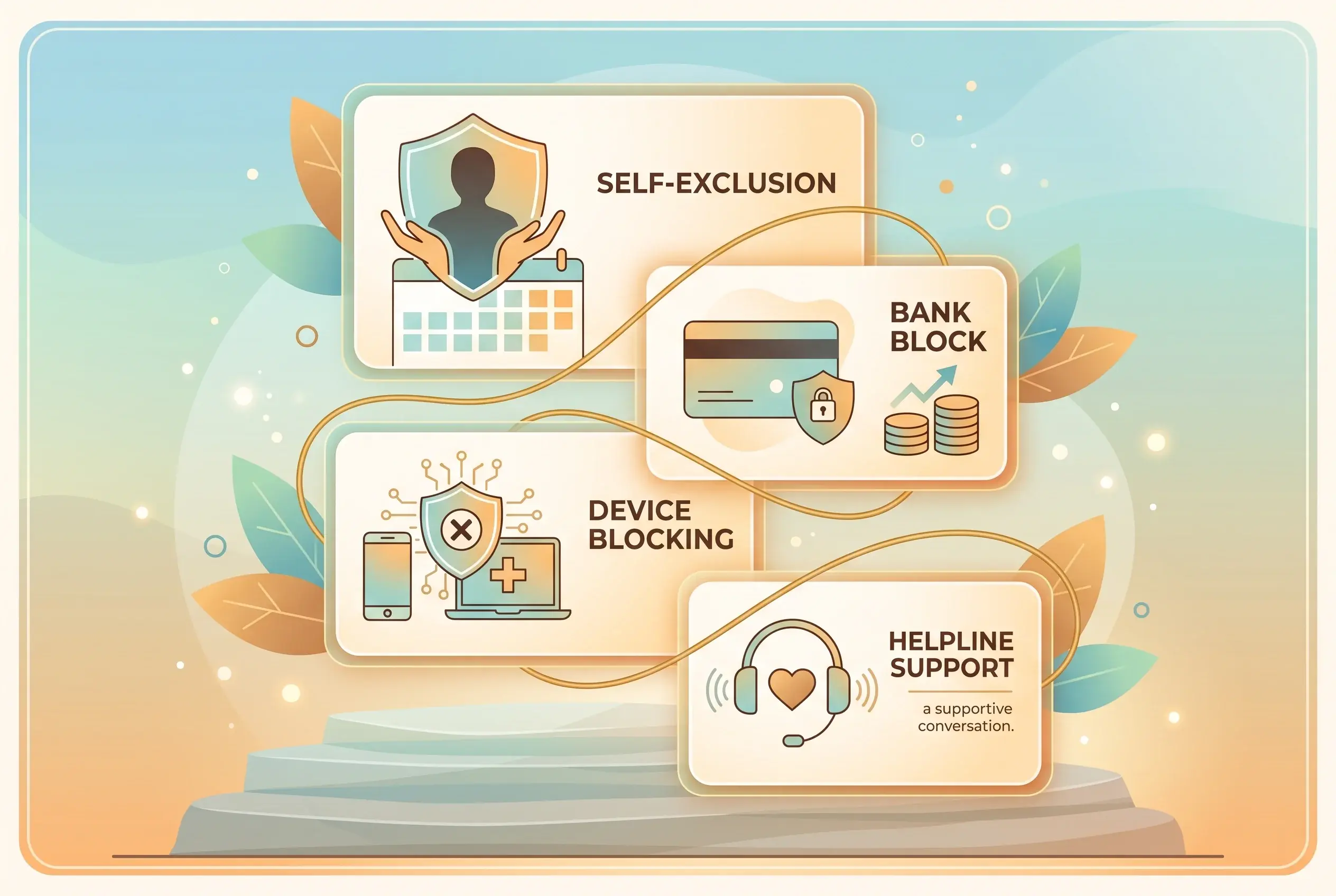
Related pages: full overview, checking a gambling website, payments and ID checks, complaints and disputes.
Table of Contents
- UK GamStop Self-Exclusion Coverage and Casino Alternatives
- If the urge to gamble feels urgent
- Scenario guide: one safer action and one thing not to do
- Bank blocks and other protective layers
- When a gambling website check is still appropriate
- What to avoid when the pressure is high
- Verified support routes
- Support choices when pressure is high
UK GamStop Self-Exclusion Coverage and Casino Alternatives
GAMSTOP is a self-exclusion scheme for online accounts with gambling companies licensed in Great Britain. It offers exclusion periods from 6 months up to 5 years, and the exclusion cannot be cancelled during the chosen period. That point matters because the fixed period is part of the protection, not a technical problem to solve.
A site described as outside GAMSTOP should not be treated as a safer alternative for someone who has chosen self-exclusion. The Gambling Commission has identified avoiding GAMSTOP as one of the motivations connected with routes into the illegal online gambling market. The practical lesson is straightforward: when the attraction is “this might let me keep gambling despite exclusion”, the risk is already present.
GAMSTOP is also not the only layer. Bank gambling blocks, blocking software, venue self-exclusion and support services can sit alongside it. Which layers are useful depends on the person, the device, the account, the payment method and the level of urgency.
If the urge to gamble feels urgent
Use a short action plan rather than trying to debate the decision in your head. The aim is not to solve everything in one minute. It is to create enough distance between the urge and the next deposit.
- Pause the payment route. Step away from the device or payment method you were about to use. If a bank block is available on your account, check how to turn it on through your bank.
- Do not look for a workaround. Avoid new accounts, alternative payment routes, borrowed cards, document shortcuts or overseas sites presented as a way around a protection tool.
- Use a direct support contact. GamCare lists the National Gambling Helpline as 0808 8020 133 and says it is available 24 hours a day, 7 days a week.
- Add another layer. Look at blocking software, bank blocks, self-exclusion tools and venue exclusion options through established support pages such as GambleAware.
- Tell one trusted person what is happening. A short message such as “I am trying not to gamble right now; can you stay with me for ten minutes?” can be more useful than a long explanation.
Scenario guide: one safer action and one thing not to do
| Situation | Safer action | Useful resource type | Do not do this |
|---|---|---|---|
| You are already on GAMSTOP | Treat the exclusion period as active and add support layers around it | GAMSTOP information and GamCare support | Do not look for sites promoted because they are outside GAMSTOP |
| A bank gambling block is active | Leave the block in place and check whether your bank offers delay or lock features | Your bank and Gambling Commission guidance on bank blocks | Do not try another route only because the blocked one stopped you |
| You are worried about losing control | Contact a support service before making another deposit decision | National Gambling Helpline and GambleAware support pages | Do not keep reading gambling offers while the urge is high |
| An account dispute is causing stress | Separate the dispute from gambling decisions and keep written records | Complaints procedure and dispute guidance | Do not gamble more to “recover” a disputed balance |
Bank blocks and other protective layers
Many banks offer gambling transaction blocks, although availability and mechanics vary by bank. Some blocks can be switched on through mobile banking; others may require contact with the bank. The important point is that a bank block is not just a payment inconvenience. It is a practical layer that can slow down a high-risk moment.
GambleAware describes gambling blocking and self-exclusion options, including GAMSTOP, blocking software, bank blocks and venue self-exclusion. These layers do different jobs. GAMSTOP focuses on online accounts with companies licensed in Great Britain. A bank block focuses on transactions. Blocking software focuses on access through devices. Venue exclusion focuses on physical locations. None of them is perfect on its own, but together they can reduce the number of easy routes back into gambling.
Do not overstate what any one layer can do. A tool may not cover every device, every payment route or every venue. The value comes from stacking layers and using support while the strongest urge passes.
When a gambling website check is still appropriate
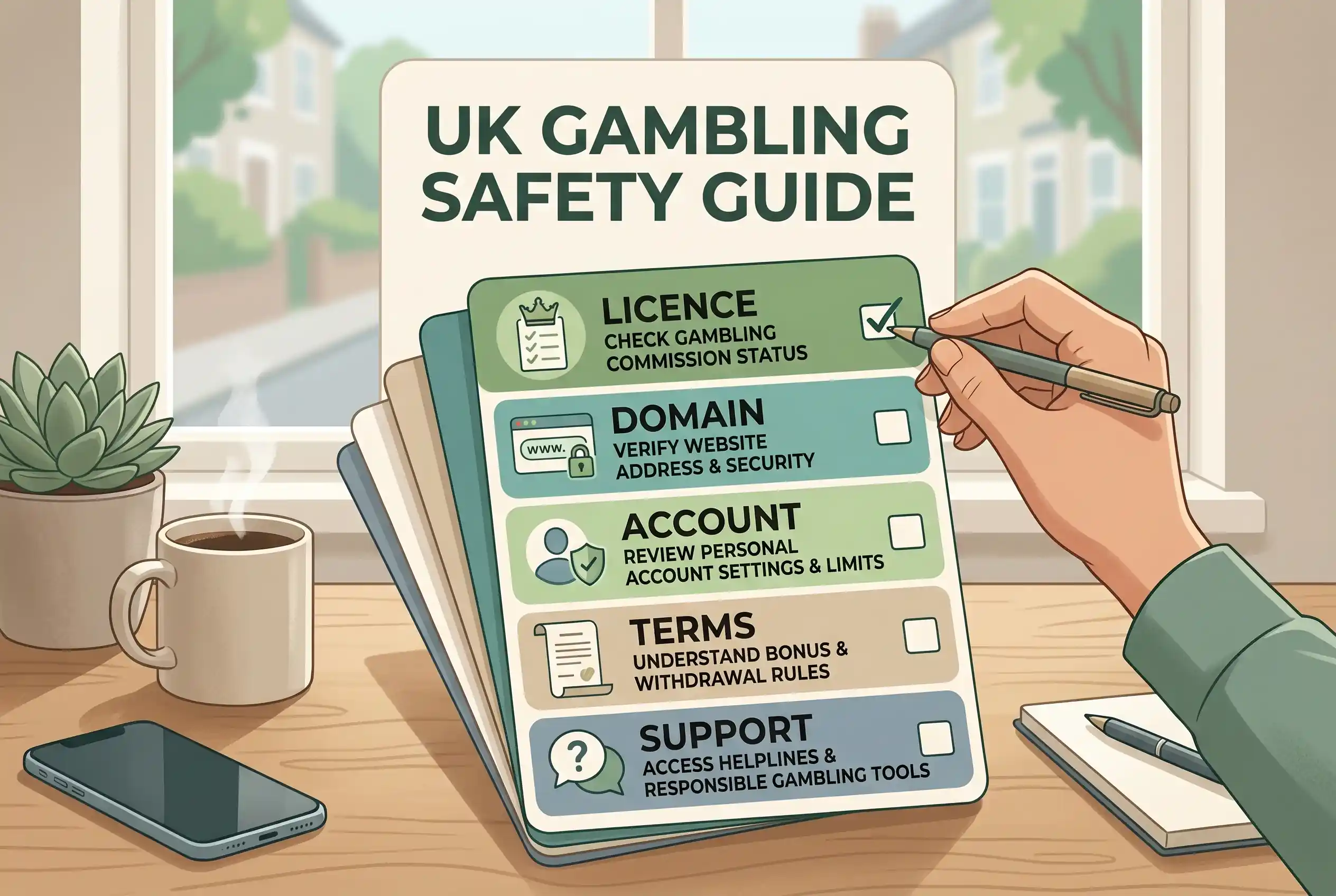
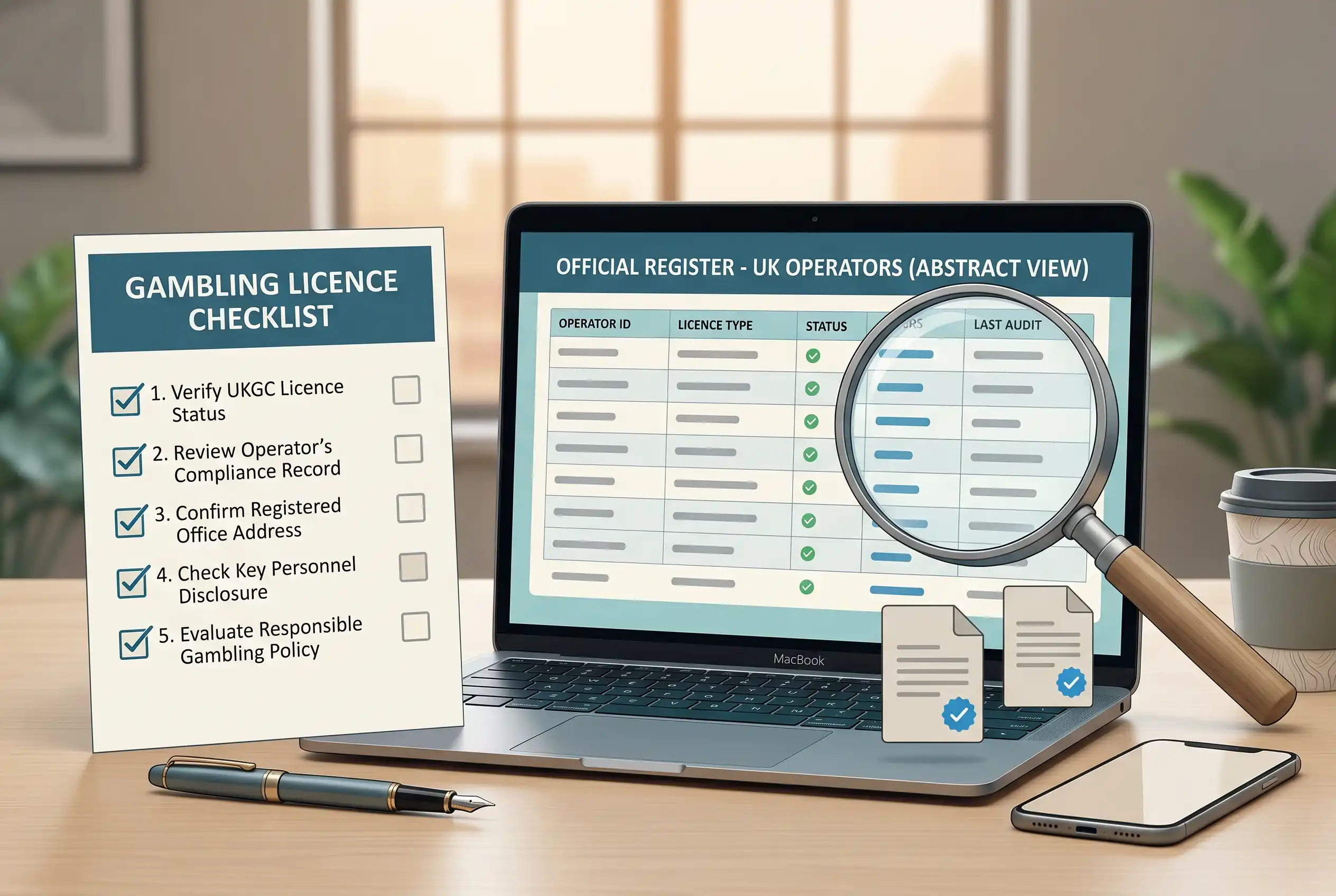
There are situations where a website check is useful: for example, you are not self-excluded, you are not trying to continue through a block, and you simply want to understand who runs a site before any deposit. In that case, use the pre-deposit verification guide. It explains how to compare business names, trading names, domains and account information with official records.
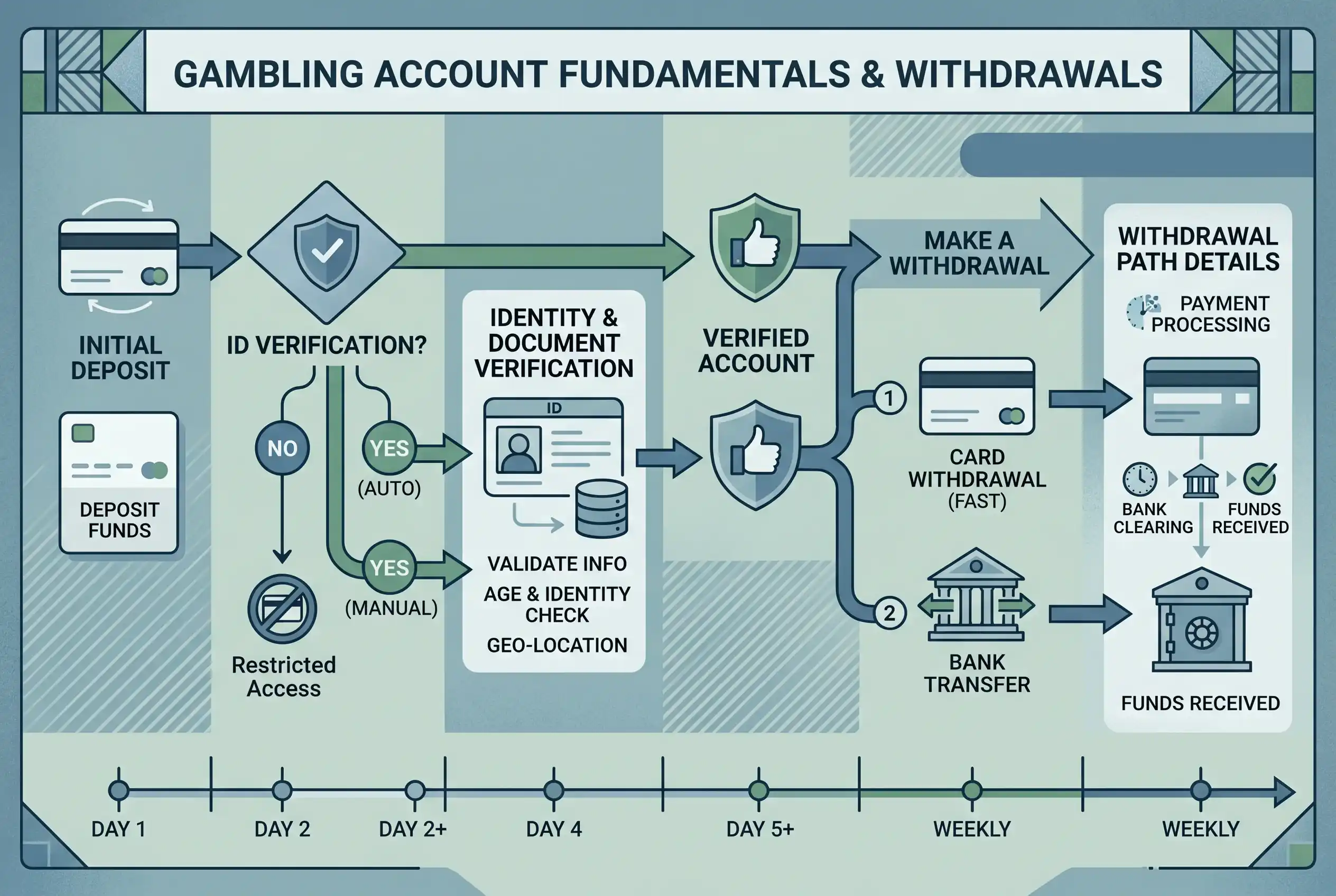
There are also situations where a payment or ID question is the main problem. If you are trying to understand a document request, credit-card boundary, withdrawal delay or financial-information request, use the payments and ID guide. But if the reason for asking is “how can I keep gambling while blocked?”, this support page is the safer route.
What to avoid when the pressure is high
- Do not open a new account because the current one is blocked or excluded.
- Do not treat a non-GAMSTOP label as a recommendation or a safety signal.
- Do not use a payment route because it avoids a bank block, credit-card rule or identity check.
- Do not send ID documents to an unknown site in a rushed attempt to keep playing.
- Do not use a bonus or “limited-time” offer as a reason to ignore an exclusion decision.
- Do not keep gambling to recover money from a withdrawal or complaint problem.
These are not moral judgements. They are practical guardrails for a moment when speed and pressure can make a bad decision feel reasonable.
Verified support routes
GamCare lists the National Gambling Helpline as 0808 8020 133 and states that it is available 24 hours a day, 7 days a week. GambleAware provides information about gambling support, blocking and self-exclusion tools. GAMSTOP provides information about its online self-exclusion scheme for gambling companies licensed in Great Britain.
- GamCare and the National Gambling Helpline.
- GambleAware blocking and self-exclusion information.
- GAMSTOP information about online self-exclusion.
- Gambling Commission guidance on bank gambling blocks.
This page cannot diagnose a gambling problem or promise a specific outcome from any service. It can give you a safer next step: use support and blocks before another deposit decision.
Support choices when pressure is high
Can GAMSTOP be cancelled early?
GAMSTOP says the exclusion cannot be cancelled during the chosen period. If you chose a period, treat it as active and build support around it.
Are bank blocks enough on their own?
Not always. Availability and mechanics vary by bank, and a block may not cover every route. It is usually stronger when combined with self-exclusion, device blocking and support.
What if the problem is an existing balance or withdrawal?
Keep that dispute separate from any urge to keep gambling. Save records and use the complaints and dispute route for account problems.
Created by the "Casino not on Gamstop" editorial team.