Casino Sites Not Registered With GamStop UK 2026: The Full Guide to Offshore Play
 Available in GB
The UK gambling market split in two a while back. On one side, the UK Gambling Commission and its national self-exclusion scheme, GamStop. On the other, a growing constellation of offshore operators that never signed up to either. And in 2026, that offshore side has more traffic, more brands, and more bonus money on the table than at any point in the last five years.
This guide walks through casino sites not registered with GamStop UK 2026 the way a market analyst would look at them — licence in one hand, cashout policy in the other, and no illusions about who is paying for the big welcome banners. If you came here expecting a love letter to offshore casinos, close the tab. If you want the operators, the rules, and the traps in plain English, keep reading.
Table of Contents
- The Non-GamStop Casino Landscape in UK 2026: Where the Market Stands
- What GamStop Actually Blocks (and What It Doesn’t)
- Why UK Players Are Looking Offshore in 2026
- Are Casino Sites Not Registered With GamStop Legal in the UK?
- How We Ranked the Best Non-GamStop Casinos: Methodology
- Top 10 Casino Sites Not Registered With GamStop UK 2026
- Non-GamStop Casino Comparison Table
- Curacao’s LOK Reform: What Actually Changed for UK Players in 2026
- Slots Not Registered With GamStop: What You Actually Get Off the £5 Cap
- Live Casino Not Registered With GamStop: Table Counts, Suppliers, Real Limits
- Payment Methods Reality Check: PayPal, Boku, Pay By Mobile and Crypto
- Bonuses, Free Spins and Wagering: What the Fine Print Actually Says
- Wagering & Bonus Value Calculator
- New Non-GamStop Casinos in 2026: Fresh Names Worth Attention
- Casino Sites Not Registered With GamStop Wales, Scotland, Northern Ireland
- European vs Curacao Non-GamStop Casinos: The Practical Difference
- Responsible Gambling Outside GamStop
- The Bottom Line
The Non-GamStop Casino Landscape in UK 2026: Where the Market Stands
Non-GamStop simply means the site holds no UK Gambling Commission licence and therefore has no legal duty to plug into GamStop’s national self-exclusion database. The site is licensed somewhere else — Curaçao in the vast majority of cases, occasionally Anjouan, Kahnawake, or Malta. From a technical standpoint that puts it outside every UK-specific consumer-protection rail: no UKGC dispute resolution, no ADR obligations, no participation in the funding pool for treatment services under the new statutory levy.
Traffic patterns tell the interesting story. Since GamStop enrolment became mandatory for every UKGC-licensed operator in 2020, and since the £5 online slot stake cap for adults 25+ went live on 9 April 2025, a meaningful chunk of higher-stakes UK slot players simply walked. They walked to the same handful of offshore brands you see recommended everywhere: GoldenBet, DonBet, FreshBet, VeloBet, CosmoBet. Not because those operators are secretly the best casinos in the world. Because their regulatory jurisdiction imposes almost none of the frictions that UK law now imposes at home.
Whether that trade — more freedom, less protection — is a good one depends entirely on what you want out of a casino account and how honestly you rate your own control over spend. The market has stopped pretending that non-GamStop equals unregulated. Most of the visible brands hold verifiable licences and operate reasonable payout policies. It just means differently regulated, on terms written a long way from Westminster.
What GamStop Actually Blocks (and What It Doesn’t)
GamStop is a free, industry-funded self-exclusion scheme run in partnership with the UK Gambling Commission. When a UK resident registers, every UKGC-licensed operator is legally required to block that person’s access for the chosen exclusion period — six months, one year, or five years. The scheme covers online casinos, sportsbooks, bingo and lottery sites that hold a UK remote licence. That’s a lot of coverage. It’s also very specifically UK-only coverage.
The scheme has no legal reach outside the UKGC’s jurisdiction. That is not a bug in GamStop. It is a consequence of how gambling regulation works — a national regulator can only bind operators it actually licenses. An online casino licensed in Curaçao, registered as a Curaçao company, and hosted offshore is not on the UKGC’s list of licensees. It has no GamStop obligation. So a UK player who is self-excluded through GamStop can still open an account there, deposit, and play.
Two things flow from this that people routinely misunderstand. First, non-GamStop operation is not itself illegal — the UKGC does not have criminal jurisdiction over foreign licensees, and no UK law criminalises the player for using them. Second, being outside GamStop does not mean the site is a scam. A properly licensed Curaçao operator with a verified CGA licence, published T&Cs and a working payout policy is a regulated business. Just regulated by a different regulator with a different set of priorities.
Why UK Players Are Looking Offshore in 2026
The regulatory tightening at home is the honest driver. From 9 April 2025 UKGC-licensed casinos have to enforce a £5 per-spin maximum on online slots for all adults, dropping to £2 per spin for 18–24 year olds from 21 May 2025. That’s a statutory instrument, not a marketing gesture, and slot mechanics have been redesigned around it. Autoplay has been out for a while, “bonus buy” features have been curtailed, and RTS 14D still forces a minimum 2.5 seconds between game cycles. If your play style is £20 spins on high-variance Nolimit City slots, the regulated UK market has effectively closed for business.
Then there are affordability checks. UK operators are expected to run enhanced financial checks once a customer crosses monthly loss thresholds, verify source of funds, and request supporting documentation. Whatever your view of the policy, it turns account registration into an ID-verification project. Non-GamStop casinos on Curaçao’s LOK framework still run KYC — that’s a licensing condition — but they run it lighter, later, and with fewer document requests up front.
The commercial side matters too. Welcome packages at UK-licensed operators have been shrinking under advertising codes, the Gambling Commission’s rules on bonus fairness, and the industry’s own self-imposed limits. Offshore operators still push £750, £1,500, occasionally larger welcome bonuses across staggered deposits, plus reload offers, weekly cashback, and rakeback loyalty structures that pay a percentage back regardless of outcome. Are these “generous”? The wagering requirements answer that question. But they’re structurally different from what remains on offer at home.
Are Casino Sites Not Registered With GamStop Legal in the UK?
Yes for the player, complicated for the operator. UK residents are not committing an offence by registering at a foreign-licensed casino. There is no criminal prohibition on placing a personal bet with an overseas operator, and there is no UKGC rule that could bind you as a customer. So playing at a non-GamStop casino from the UK is legal from the punter’s side.
The operator side sits in a grey zone. Under the Gambling Act 2005 an operator that actively markets to UK residents is expected to hold a UKGC licence. In practice, non-GamStop casinos avoid the strictest interpretation of this by not running UK-targeted advertising campaigns, by accepting UK registrations through direct search rather than paid ads, and by relying on affiliate traffic. The Commission does not consider these platforms lawful for the UK market. But it cannot force an offshore operator to shut, and it cannot criminalise a private UK punter for opening an account.
What UK players lose is the consumer safety net. There’s no access to UKGC dispute resolution, no ADR provider you can escalate to, and no compensation scheme if the site collapses. Some UK banks — Barclays, Monzo, and Starling have all done this at various points — flag or block transactions to offshore gambling sites, which is a practical inconvenience even where technically legal. If a payment goes wrong, your recourse is whatever the offshore regulator provides, which for Curaçao’s Gaming Authority in 2026 is markedly better than it was three years ago but still not equivalent to UK protections.
How We Ranked the Best Non-GamStop Casinos: Methodology
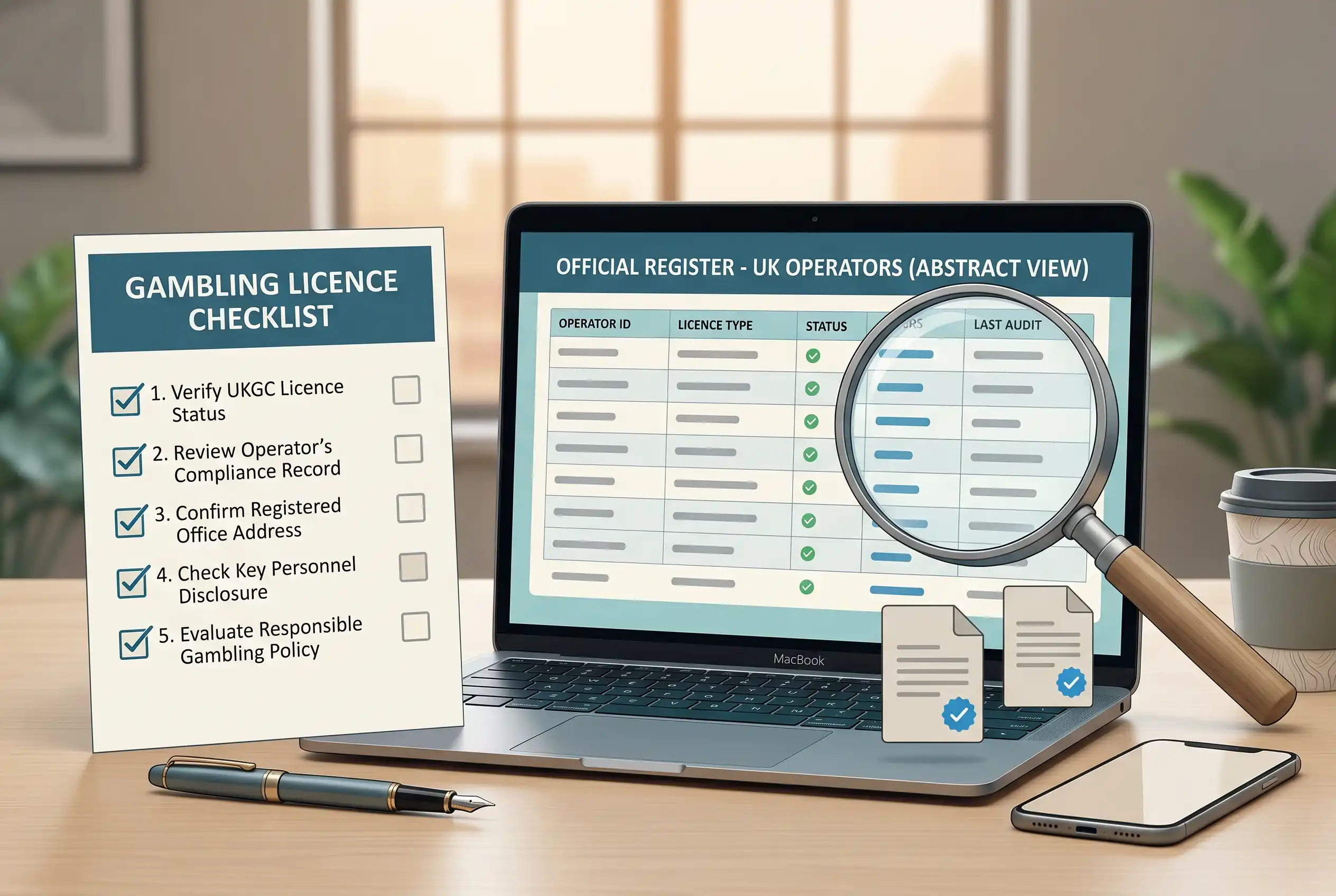
Every operator on the list below had to clear a verifiable licence check first. That means a valid, active licence number issued by a recognised authority — Curaçao Gaming Authority under the LOK framework in most cases, occasionally Anjouan or Kahnawake — with the licence page publicly linked from the casino’s footer. No licence, no listing. This ruled out a large number of white-label brands that only publish generic footer text without a lookup ID.
The second filter was payout reliability. We looked at withdrawal timings pulled from operator T&Cs, community reports across public complaint boards, and the actual documented experience with each site’s finance team. Sites that ran repeated pending-verification loops beyond a reasonable KYC window did not make the cut. So did any brand where community reports converged on “requests approved then reversed” behaviour.
The third layer was game and payment breadth: library size, key studio coverage (Pragmatic Play, Nolimit City, Hacksaw Gaming, Evolution live), banking options that clear for UK cards or crypto without repeated failures, and bonus fairness measured as wagering requirement × maximum bet × win cap. Marketing headline was ignored. A “300% welcome bonus” behind 60× wagering with £5 max bet is arithmetically worse than a 100% bonus behind 30× and £15 max bet, and we scored accordingly.
Top 10 Casino Sites Not Registered With GamStop UK 2026
This section covers the ten operators most consistently visible across UK non-GamStop rankings in 2026, cross-referenced against actual licence status. Names appear roughly in order of overall breadth and reliability, not by bonus size. Bonus percentages and wagering figures below reflect standard T&Cs at the time of writing — offers rotate, so verify at the cashier before you deposit.
1. GoldenBet
GoldenBet operates under a Curaçao Gaming Authority licence and pulls its game catalogue from eight studios including Pragmatic Play, NetEnt, Microgaming, Hacksaw Gaming and Nolimit City. Approximately 5,600 slots sit in the main lobby, alongside 200 live tables powered by Evolution and Ezugi. That live-table count is joint-largest among the operators reviewed here, which matters if you play evenings when standard-limit Evolution tables queue.
The welcome package runs across the first four deposits and stacks free spins on top, and the site pairs the casino with an integrated sportsbook covering the usual football, tennis and MMA breadth. Where GoldenBet earns its position is the recurring weekly cashback rather than the one-shot welcome — regular play returns a fixed percentage regardless of session outcome, which for consistent depositors compounds meaningfully over a quarter. Live-chat support runs 24/7 and responds inside a couple of minutes on average.
Downside honesty: KYC gets triggered aggressively above roughly £2,000 aggregate deposits, and the withdrawal reliability slips slightly for bank transfers versus crypto rails. Card and e-wallet cashouts typically clear inside 24 hours; SEPA transfers stretch to 48–72. Not deal-breaking, but worth planning around.
2. DonBet
DonBet holds a CGA licence and runs the largest game library in this comparison at roughly 8,000 titles, of which 6,000 are slots drawn from Pragmatic Play, Play’n GO, Hacksaw Gaming, Nolimit City, BGaming and Betsoft. The mafia-themed brand identity is louder than it needs to be, but the underlying platform is competent and the operator has a track record of paying withdrawals inside its stated windows.
Four separate welcome tracks let you choose casino-heavy, sports-heavy, live-casino-focused, or a balanced split — an unusually flexible structure for the segment. Live dealer sits at 80 tables across Evolution and Ezugi, which is smaller than GoldenBet and CosmoBet but broad enough for standard blackjack and roulette play without long queues. Crypto deposit rails are handled cleanly and process on-chain confirmations promptly, which for privacy-focused punters is the main draw.
The catch is bonus wagering. The headline welcome numbers look large; the playthrough behind them is meaningful, and the maximum-bet-while-bonus-active clause is strictly enforced. Read the T&Cs before you commit to the largest deposit tier, or the “reward” becomes an expensive lesson in how offshore bonuses actually work.
3. FreshBet
FreshBet is the most sports-heavy operator in this list, pairing a 5,000-title casino with sportsbook coverage of over 90,000 live sporting events annually. Casino side is 4,800 slots from Evolution, Pragmatic Play, Thunderkick, Quickspin, Red Tiger and Play’n GO — a tighter provider roster than DonBet or GoldenBet, but skewed to higher-RTP studios. The site publishes an average catalogue RTP of 96%, which is a more transparent headline figure than most competitors bother with.
The loyalty structure is where FreshBet meaningfully separates itself. Instead of a comp-points-to-vouchers ladder, the site runs a rakeback model that returns a percentage of house edge on your total wagered volume, delivered automatically rather than requested. For consistent slot or in-play sports players, rakeback compounds where standard VIP schemes leak value through non-cashable rewards and expiring balances.
Live dealer runs 120 Evolution tables with no secondary supplier, which keeps streaming quality consistent but limits variety at the lower-stakes end. Withdrawals clear inside 24 hours for crypto, 24–48 for cards. The sportsbook interface is genuinely well built, which cannot be said of most offshore casino-plus-sports hybrids.
4. VeloBet
VeloBet is a newer entrant that has grown fast on the strength of a clean interface, no-nonsense bonus terms, and a genuinely broad payment stack. Curaçao-licensed under LOK, the site carries roughly 4,500 casino titles including live tables from Evolution, with strong coverage of Nolimit City and Hacksaw Gaming for punters who care about high-variance mechanics.
The welcome bonus keeps the marketing to a modest match with an unusually low wagering multiplier — the sort of terms you rarely see below the top-tier operators. Cashout limits are transparent and posted at the cashier before you deposit, which sounds like a basic expectation and, in this segment, actually isn’t. Where VeloBet slips is depth of provider mix; if you specifically want obscure European studios, the catalogue thins out fast.
Support is 24/7 via chat and reasonably competent, though English response quality drops slightly during Asian trading hours when the offshore support desk rotates. Overall this is one of the more UK-player-friendly newer non-GamStop casinos to have surfaced in the last eighteen months.
5. CosmoBet
CosmoBet is the low-minimum entry option in this list, with deposit thresholds starting at £1 in some payment channels and welcome offers scaled for lower-roll players. That £1 minimum is unusual and genuine — most non-GamStop operators want a £10 or £20 baseline. Curaçao licence, roughly 7,000 games including 5,500 slots, and 200 live tables from Evolution and Ezugi make it a broadly capable casino, not just a starter site.
The provider roster mirrors GoldenBet closely, which is not a coincidence — several of these brands share back-end infrastructure. The differentiation shows up in the promotion cadence: weekly reload bonuses, a birthday offer that isn’t just a token spin package, and a tournament schedule that runs regularly rather than showing up once a quarter. Live-dealer availability at standard blackjack limits is consistently better than the smaller operators in this group.
The downside is the bonus wagering side. Terms are middle-of-the-pack rather than genuinely generous. And the cashout policy caps weekly withdrawals at a level that will constrain higher-roll punters — a £10,000-per-week ceiling is fine for most players and irritating for a specific subset. Read the cashier limits before you rely on this site for larger balances.
6. MyStake
MyStake is the more marketing-heavy operator in this list — you have probably seen the ads. Underneath the branding the site holds a Curaçao licence, runs a genuinely broad casino library, and has been operating long enough to establish a payout track record that lands in the “usually fine” category. The site pairs casino with a sportsbook that leans heavily on esports and virtual sports alongside the standard mainstream markets.
Where MyStake earns its ranking is game variety in categories most operators underweight: crash games, mines-style instant-wins, and the Aviator-family titles that have become a category in their own right. If you split time between traditional slots and these newer format games, MyStake stocks the widest spread in this list. Live dealer coverage is Evolution-standard, roughly 100 tables, competent rather than exceptional.
Downsides: the welcome bonus fine print includes several clauses that trip up first-time bonus users, particularly around game contribution rates. Withdrawal timings are honest for crypto and cards, slower than average for bank transfer. Support quality has improved over the last year but still runs behind the top three on this list. Treat it as a functional non-GamStop option rather than a first-choice destination.
7. BassWin
BassWin is the outlier in this comparison. A 5,000-game library sounds competitive until you notice that only 1,500 of those are slots — the rest sit in table variants, crash games, and instant-win categories. If your primary interest is spinning reels, BassWin is not the fit. If you play blackjack and roulette variants alongside slots, the balance may actually suit you.
The provider mix leans on Amatic and Novomatic alongside Pragmatic Play, which gives the slots section a classic fruit-machine flavour rather than the modern high-variance Nolimit City / Hacksaw feel. Sportsbook coverage runs to 55+ sports, the broadest offer in this comparison, which for punters who want a genuine sports-heavy operator with casino tacked on rather than the reverse is a legitimate advantage.
The site holds a Curaçao licence and pays out reliably inside its stated windows. Welcome bonus terms are middle-tier, live-dealer count sits at 90 Evolution tables, and cashout limits are competitive rather than exceptional. Position on this list reflects operational competence, not headline appeal.
8. Rolletto
Rolletto has built a following on competitive wagering requirements — the site’s welcome bonuses genuinely sit at the lower end of the segment on playthrough multipliers, which is meaningful when the offshore norm hovers around 40× to 50×. Curaçao licence, roughly 4,000 titles, and a payment stack that covers cards, e-wallets, crypto, and a handful of localised deposit channels.
Live dealer coverage is Evolution-driven and reasonable at around 100 tables. Slots skew mainstream — Pragmatic Play, NetEnt, Play’n GO — with less depth in the high-variance corner of the market. What Rolletto does well is bonus mechanics: cleaner terms, honest maximum-win caps, and a reload schedule that actually cycles rather than gating everything behind first-deposit qualification.
The site’s cashout reliability holds up under review, though bank-transfer withdrawals stretch to 48–72 hours for UK residents. Support runs 24/7 but not always with the fastest English-language responses. Reasonable choice for players who prioritise bonus terms over library size.
9. Slots Amigo
Slots Amigo’s identity is exactly what the name suggests — slot-forward, minimal table game depth, and a design that prioritises the reel-spinning experience. Curaçao-licensed, with a game library heavy on Pragmatic Play, Hacksaw, Nolimit City and BGaming. Live casino exists but is not the point; if you want serious live-dealer coverage, look elsewhere on this list.
The welcome offer is slot-specific with free spin packages weighted toward high-RTP titles from the studios above. Wagering runs mid-tier, maximum-bet-during-bonus clauses are enforced strictly, and the free-spin winnings cap is capped in a way that limits upside on the largest offers. Standard offshore bonus mechanics, executed cleanly.
Payment support is broad on the deposit side, narrower on withdrawals — bank transfer and card cashouts are reliable, e-wallet withdrawal is sometimes gated behind KYC-plus documentation for larger sums. Support quality is competent. This is a good site for slot-focused UK players who do not want a sportsbook, live-dealer emphasis, or a large table-game section cluttering the interface.
10. ZizoBet
ZizoBet rounds out this list as one of the newer names that has established enough operational history to be worth mentioning without a lengthy caveat. Curaçao licence under LOK, a slot library of roughly 3,500 titles from a mainstream provider mix, and live casino coverage that sits around 60 Evolution tables.
The welcome package is smaller than the GoldenBet / DonBet tier but carries lower wagering, which for smaller-stakes players is a fair trade. The site’s differentiator is a no-KYC-below-threshold policy for crypto deposits — anonymous play up to a defined limit — which fits a specific subset of players who prioritise privacy over bonus size.
Cashout policies are transparent, withdrawal timings hold up in practice, and support is reasonably responsive. The catch is depth: game categories outside slots are underdeveloped, sportsbook is minimal, and if you are looking for a comprehensive gambling operator rather than a slot-focused one, ZizoBet won’t cover the full ground.
Non-GamStop Casino Comparison Table

This is the numeric side of the operator reviews above, condensed into columns you can scan without re-reading. Bonus figures reflect standard welcome offers at the time of writing. Withdrawal times are typical crypto or e-wallet windows — bank transfer slower everywhere.
| Operator | Welcome Bonus (typical) | Licence | Payout Speed (crypto/card) | Min Deposit | Standout Feature |
|---|---|---|---|---|---|
| GoldenBet | Up to €/£750 + spins across first 4 | Curaçao (CGA / LOK) | 24h | £20 | Weekly cashback + 200 live tables |
| DonBet | Up to €/£1,500 across 4 welcome tracks | Curaçao (CGA / LOK) | 24h | £20 | Largest library (8,000 games) |
| FreshBet | Up to €/£1,500 casino + sports | Curaçao (CGA / LOK) | 24h | £20 | Rakeback loyalty, 96% avg RTP |
| VeloBet | Up to €/£1,000 + spins | Curaçao (CGA / LOK) | 24h | £20 | Low bonus wagering, clean terms |
| CosmoBet | Up to €/£500 + spins | Curaçao (CGA / LOK) | 24–48h | £1 | Lowest entry point, 200 live tables |
| MyStake | Up to €/£1,000 + spins | Curaçao (CGA / LOK) | 24–48h | £20 | Deep crash / instant-win category |
| BassWin | Up to €/£1,000 + spins | Curaçao (CGA / LOK) | 24–48h | £20 | 55+ sport sportsbook coverage |
| Rolletto | Up to €/£500 + spins | Curaçao (CGA / LOK) | 24–48h | £20 | Lowest wagering multipliers |
| Slots Amigo | Up to €/£800 + spins | Curaçao (CGA / LOK) | 24h | £20 | Slot-focused, no sportsbook clutter |
| ZizoBet | Up to €/£500 + spins | Curaçao (CGA / LOK) | 24–48h | £20 | No-KYC crypto under threshold |
Numbers here are indicative and rotate. Always verify at the cashier before depositing. And in every case — every single one — the welcome bonus is contingent on wagering requirements that will substantially reduce or eliminate the theoretical value if you clear them at anything other than optimal game selection. “Free” money is a marketing convention. Casinos do not run charity operations.
Curacao’s LOK Reform: What Actually Changed for UK Players in 2026

Most guides to non-GamStop casinos still describe Curaçao’s regulatory setup as it existed in 2020. That description is now wrong, and the difference matters for anyone actually using these sites. On 24 December 2024 the LOK — the National Ordinance on Games of Chance, or Landsverordening op de Kansspelen — came into force after passing the Curaçao parliament in a 13–6 vote earlier that month. That legislation replaced the old master-and-sub-licence system that had existed since 1993.
Under the pre-LOK model, four private master licence holders sold sub-licences to hundreds of operators with minimal oversight and no direct regulatory accountability. That structure was the reason Curaçao acquired its reputation as a haven for grey-market operators. Under LOK, every operator holds a direct licence issued by the Curaçao Gaming Authority — a genuinely independent regulator that replaced the old Gaming Control Board — and every licence is issued, listed, and revocable at the CGA level. Master licences no longer exist. Sub-licences no longer exist. Every casino you can legitimately play at holds a direct CGA authorisation with a verifiable number.
What this means in practice: AML and KYC requirements are tighter and actively audited; responsible-gambling standards are conditions of licensing rather than optional add-ons; B2C and B2B licences are formally separated; and the CGA has real enforcement powers, including licence revocation, that the old GCB did not exercise. As of early 2025 the regulator reported over 220 licences already granted under LOK with roughly 600 expected by end of Q1 2025. Old master-sub-licences expired in January 2025.
For a UK player, the practical upshot is that “Curaçao-licensed” in 2026 means something meaningfully more robust than it did three years ago. It is still not equivalent to a UKGC licence. There is still no UK dispute-resolution service you can escalate to. But the baseline for legitimate CGA-licensed operators has risen sharply, and the enforcement gap that made Curaçao the historical target of international criticism has narrowed. Casinos hiding under fake or expired licence numbers are easier to identify because the CGA maintains a public licensee registry — checking it takes thirty seconds and saves an unlimited amount of grief.
Slots Not Registered With GamStop: What You Actually Get Off the £5 Cap
The single biggest reason UK slot players now look offshore is the £5-per-spin ceiling — £2 for adults under 25 — that has applied to every UKGC-licensed casino since spring 2025. Non-GamStop operators are not bound by that rule, and their slot lobbies reflect it. Bet limits at Curaçao-licensed operators routinely allow £50, £100, sometimes up to £500 per spin on individual titles. For lower-stakes players this is irrelevant. For high-variance slot punters chasing rare bonus hits, it changes the entire economics of a session.
Provider coverage at non-GamStop casinos is where the practical differences show up. Pragmatic Play appears everywhere — GoldenBet, FreshBet, DonBet, CosmoBet, BassWin, all of them. Nolimit City is stocked at GoldenBet, DonBet, CosmoBet and Slots Amigo, and matters because their high-variance mechanics have been aggressively restricted at UK-regulated sites. Hacksaw Gaming’s cluster-pay and cascading-reel titles show up across the top four operators. Thunderkick and Quickspin (both known for higher-RTP profiles) sit primarily at FreshBet. If you specifically want a title that’s been altered or withdrawn from the UK-regulated market, offshore is often the only way to find the original mechanics.
RTP transparency is patchy across the segment. FreshBet publishing a 96% average catalogue RTP is unusually honest; most operators avoid publishing an aggregate figure at all because it exposes the studio mix. The reality is that RTP varies per title and per configuration — a slot that ships at 96.5% at one operator can be configured at 94% or even lower at another. Check the game info panel before playing. Studios like Pragmatic Play and Nolimit City publish standard RTPs on their end, but nothing prevents a casino from selecting a lower configuration where the studio allows it.
Autoplay features and bonus buy mechanics that have been removed from UK-regulated slot lobbies are typically still present offshore. So is the ability to play at faster speeds than the RTS 14D 2.5-second minimum cycle imposed on UK sites. Whether that’s a feature or a hazard depends entirely on your relationship to session length. It is objectively easier to lose money faster offshore. That’s not a disclaimer — that’s arithmetic.
Live Casino Not Registered With GamStop: Table Counts, Suppliers, Real Limits
Evolution is the live-dealer backbone at every operator on this list. The company’s infrastructure at scale simply outpaces every alternative in the segment. What differs between non-GamStop casinos is the number of tables they run and whether they’ve added a secondary supplier — usually Ezugi (owned by Evolution) or Pragmatic Play Live.
GoldenBet and CosmoBet lead this list with roughly 200 live tables each. That count matters most during peak evening hours in UK and European timezones, when standard-limit Evolution blackjack and roulette tables at smaller casinos queue for admission. DonBet’s 80 tables plus Ezugi coverage gives a slightly different mix of lower-stakes tables suited to punters who don’t want £25 minimums. FreshBet at 120 is Evolution-only and adequate. BassWin at 90 and Rolletto at around 100 sit in the middle of the pack.
Bet limit ranges are the practical differentiator that most guides ignore. Non-GamStop operators typically make Evolution’s higher-limit tables (£1,000+ hands on blackjack, £5,000+ on baccarat) available without the additional VIP verification UK-regulated sites impose. Game show titles — Crazy Time, Lightning Roulette, Monopoly Live, Mega Ball — are available at every operator on this list. Regional variants like Andar Bahar and Teen Patti appear where Ezugi is integrated. Language options for dealer voice-over cover the standard European set and typically several more.
Streaming quality and interface consistency are handled at the Evolution end, which standardises the experience. What each casino controls is the wrapper — the lobby UI, the live-chat integration, the ability to switch between live tables and RNG products without reloading — and here CosmoBet, GoldenBet and FreshBet execute noticeably more smoothly than the second-tier names on this list.
Payment Methods Reality Check: PayPal, Boku, Pay By Mobile and Crypto

Here’s the technical truth that most guides bury under marketing copy. Pay by mobile and Boku deposits do not exist at non-GamStop casinos. They cannot exist. Phone bill deposits in the UK run through carrier billing networks — Boku, Payforit, Fonix — and every one of those networks requires the receiving operator to hold a UKGC licence. This is a regulatory condition on the mobile carriers themselves, not a preference of individual casinos. No offshore operator can process a charge to your EE, O2, Vodafone or Three phone bill, regardless of what it says in the promotional copy.
That fact does not stop dozens of affiliate sites advertising “Boku casinos not on GamStop” and “pay by mobile non-GamStop.” What those pages are actually selling, when you drill in, is either legitimate UKGC-licensed operators that happen to accept Boku (which are on GamStop), or offshore operators that will let you deposit via alternative rails that they’ve labelled as “mobile-friendly.” Genuine non-GamStop Boku is a technical impossibility. Anyone telling you otherwise is either confused or hoping you are.
What non-GamStop casinos actually accept is the following: debit and credit cards (Visa and Mastercard, subject to your UK bank’s willingness to authorise the transaction — Barclays, Monzo and Starling all block or flag offshore gambling merchants intermittently); e-wallets including Skrill, Neteller, MuchBetter and Jeton, with typical 1–2% fee structures; bank transfer, slower and subject to the same UK bank interception risk; and cryptocurrency, primarily Bitcoin, Ethereum, Litecoin and increasingly USDT, with faster settlement and lower friction than any fiat rail.
PayPal support at non-GamStop casinos is uneven. PayPal’s own terms restrict processing for offshore gambling merchants, and while some operators publicise PayPal support, actual availability rotates as PayPal’s compliance team reviews merchant categories. Treat “PayPal casinos not registered with GamStop” as a category that exists intermittently rather than reliably. Crypto is the rail that consistently works for UK players at offshore operators — faster deposits, faster withdrawals, no UK bank interception, and privacy that scales with the coin choice.
The table below summarises which rails actually work at Curaçao-licensed operators serving UK players in 2026, and where the friction shows up in practice.
| Payment Method | Works at Non-GamStop | Deposit Speed | Withdrawal Speed | Typical Fees | Notes |
|---|---|---|---|---|---|
| Visa / Mastercard debit | Yes, intermittent bank blocks | Instant | 24–48h | 0–2% | Some UK banks flag or reject offshore gambling merchants |
| Skrill | Yes, widely | Instant | Few hours to 12h | ~1% | Most reliable e-wallet across the segment |
| Neteller | Yes, widely | Instant | Few hours to 12h | ~1% | Similar profile to Skrill |
| MuchBetter | Yes, growing | Instant | Same-day | Variable | Mobile-focused wallet, popular at newer sites |
| PayPal | Rarely, unreliable | Instant when available | 24h | 1–2% | Availability rotates with PayPal compliance reviews |
| Boku / Payforit / Fonix | No | N/A | N/A | N/A | Carrier billing requires UKGC licence — blocked at source |
| Apple Pay | Deposit-only at some | Instant | Not supported | 0 | Withdrawal must use alternative rail |
| Bitcoin | Yes, widely | Minutes | 1–4h typically | Network fee only | No UK bank interception, fastest reliable rail |
| Ethereum / Litecoin / USDT | Yes, widely | Minutes | 1–4h typically | Network fee only | Same profile as BTC, variable network cost |
| UK bank transfer | Yes, subject to bank block | 1–3 business days | 48–72h | 0 | Slowest, most likely to trigger UK bank flags |
Bonuses, Free Spins and Wagering: What the Fine Print Actually Says
Every welcome bonus at a non-GamStop casino is engineered to look larger than its expected value. That’s not a criticism of the segment; it’s the structure of the product. A “£1,500 welcome package” typically means a 100% match on your first deposit up to £500, plus 50% on your second up to £500, plus 25% on your third up to £500. To hit the full £1,500 you deposit at least £2,000 across three staggered qualifications. The bonus amount then has to be wagered — typically 30× to 50× — before any of it becomes withdrawable.
Wagering & Bonus Value Calculator
A “£1,500 welcome package” is not £1,500 of value. Enter the terms and see what the bonus is actually worth after wagering — the turnover you’d have to cycle, the expected loss clearing it, and whether the arithmetic works in your favour.
How this is worked out: turnover = bonus × wagering multiplier. Expected loss = turnover × (100% − RTP), i.e. the house edge cycled through that volume. Real value = bonus credited − expected loss. This is a statistical expectation over the long run, not a promise — short sessions swing either way. Max-bet-while-bonus clauses, excluded games and time limits can lower the real value further. Figures are indicative — verify terms at the cashier. 18+, please play responsibly.
Do the arithmetic. A 40× wagering requirement on a £500 bonus means £20,000 of bet volume needs to cycle through slots that count 100% toward wagering before you can cash a penny of that bonus. At a 96% RTP average and unlimited variance patience, that costs the house roughly the expected loss on £20,000 of turnover — which is exactly what the “gift” is designed to cover. The casino is not giving you £500. The casino is renting you £500 for the cost of the expected losses on the wagering.
Free spins packages work identically. A “200 free spins” welcome offer typically carries a maximum win cap of £100 or £200 combined, wagering multipliers on the winnings themselves, and often a maximum-bet-during-bonus clause of £5 or lower. Break any of those clauses and the winnings evaporate. This is standard across the segment. What separates the better operators from the worse ones is not the size of the marketed bonus but the honesty of the maximum-win cap and the clarity of the excluded games list.
Rakeback and cashback structures — the sort FreshBet and GoldenBet run — are structurally more player-friendly than one-shot welcome offers because they pay back a defined percentage of house edge on volume, without wagering requirements attached. They do not headline as impressively as “£1,500 welcome,” but for consistent players over a quarter of activity they return meaningfully more actual money. If you plan to play regularly at one non-GamStop site, ignore the welcome banner and evaluate the loyalty structure instead.
One more thing worth stating plainly. “VIP programme” at almost every offshore operator is dressed-up churn management — the equivalent of a cheap motel with fresh paint. Every “exclusive host” and every “personal manager” is running the same retention KPI as every other offshore casino. Some VIP schemes are structurally better than others because they pay honest cashback and process withdrawals faster. Most are theatre. Treat the offshore “VIP” designation as a coat of gloss, not a business relationship. Nobody at a Curaçao casino is your friend.
New Non-GamStop Casinos in 2026: Fresh Names Worth Attention
The non-GamStop segment turns over faster than the UKGC-regulated market because launch costs on a Curaçao licence are meaningfully lower than a UKGC one and because affiliate marketing at scale can spin up a new brand’s traffic within a quarter. That churn produces a steady stream of new sites, most of which are white-label operations running on shared back-end infrastructure. A handful are genuinely differentiated launches worth watching.
Names surfacing across UK-facing non-GamStop rankings in 2026 include ZizoBet (covered above), BetPortal, Nitrobet, Wildies and a handful of crypto-first launches under the Anjouan licensing regime rather than Curaçao. The Anjouan Licensing Services Inc. framework has drawn crypto-native operators looking for faster application timelines and lower ongoing costs than the LOK-era Curaçao licence — the Anjouan licence covers casino, sportsbook and multiple verticals under one permit, with published costs around €17,800 for setup and yearly renewals.
What distinguishes a genuinely new operator worth registering at from a white-label rebrand is licensing verifiability, published T&Cs that read as though a lawyer wrote them rather than copy-pasted them, and cashier-side transparency about minimum deposits, withdrawal limits, and processing windows. New operators without a payout history are inherently riskier than established brands with three years of documented performance. That risk is not zero, and it is not always disclosed in the sponsored write-ups you’ll see on affiliate sites.
The safer default for UK players entering the non-GamStop segment is to start at one of the top four or five established brands on this list, build familiarity with how offshore banking, verification and support actually work in practice, and only then consider newer launches. The bonus terms at new sites are sometimes better; the trade-off in operational track record is real.
Casino Sites Not Registered With GamStop Wales, Scotland, Northern Ireland
GamStop is a UK-wide scheme, not an England-only one. A Welsh, Scottish, or Northern Irish resident who has registered on GamStop is blocked from every UKGC-licensed operator across the UK, regardless of which nation they live in. Non-GamStop operation is therefore identical across all four UK nations from the player’s perspective — the same offshore operators, the same Curaçao licensing framework, the same practical account behaviour.
There are minor practical differences worth noting. Some UK banks apply gambling-merchant blocking policies that vary by regional branch rules or that trigger differently based on transaction volume patterns. A Welsh customer using a Cardiff branch of a UK high-street bank will not, in practice, face different transaction-processing outcomes than a London customer — but the anecdotal experience varies enough across community reports that it’s worth mentioning. Cryptocurrency rails bypass this entirely.
Northern Ireland’s gambling regulation sits under separate legislation from England, Scotland and Wales — the Betting, Gaming, Lotteries and Amusements (Northern Ireland) Order 1985 — but this concerns land-based venues rather than online play. UK Gambling Commission oversight and GamStop membership apply to remote operators serving Northern Ireland customers on the same terms as the rest of the UK, and non-GamStop casinos operate offshore in the same way for Northern Irish residents as elsewhere.
European vs Curacao Non-GamStop Casinos: The Practical Difference
Not every non-GamStop casino is Curaçao-licensed. A minority hold Malta Gaming Authority licences and market to European players — those sites are technically outside GamStop because Malta has its own regulatory framework, but they operate under a materially stricter licensing regime than Curaçao. MGA licences require published RNG certification, formal player-protection tools, mandatory ADR access via Malta’s own dispute resolution service, and regulated bonus terms.
The practical trade-off for UK players is that MGA-licensed sites deliver stronger consumer protections but tighter bonus terms and stricter KYC. Withdrawal timings at MGA sites are typically bank-standard rather than instant. Bonus wagering multipliers are lower on average, but maximum-win caps and bet limits during bonuses are enforced strictly. If you value regulator-backed dispute resolution over the largest possible welcome offer, an MGA-licensed non-GamStop site is a meaningfully different product than a Curaçao one.
Kahnawake-licensed operators, based on the Mohawk Territory of Kahnawake in Canada, are a small third category. Kahnawake’s regulatory framework has been in operation since 1996 and enjoys reasonable international credibility, but the number of major casino brands operating under Kahnawake targeting UK players is small in 2026. Anjouan licences — newer to the space and increasingly common among crypto-focused launches — sit in the same category as pre-LOK Curaçao in terms of maturity, and should be evaluated case-by-case rather than treated as a uniform mark of quality.
For the practical UK player choosing a non-GamStop casino in 2026, the decision comes down to what you’re actually optimising for. Curaçao under LOK is the mainstream, high-bonus, faster-payout option with an increasingly credible regulator. Malta is the stricter, more protective, lower-bonus option. Anjouan and Kahnawake are niche. Understand the trade-off before you register.
Responsible Gambling Outside GamStop

Playing outside GamStop removes the single strongest external control the UK gambling framework provides. GamStop exists because the evidence on self-exclusion effectiveness is real — a person who has voluntarily blocked themselves from UK-regulated gambling has statistically better outcomes than one who has tried other approaches. Choosing a non-GamStop operator, especially after having previously self-excluded, means taking on personal responsibility for controls that the national scheme would otherwise enforce.
Every legitimate Curaçao-licensed operator under LOK is required by licensing conditions to provide responsible-gambling tools: deposit limits, session time reminders, cooling-off periods, and site-specific self-exclusion. These tools work only within the individual operator’s system. Excluding at one non-GamStop casino does not exclude you at any other. There is no cross-operator database equivalent to GamStop in the Curaçao regulatory framework. Anyone who describes an “offshore GamStop” is describing something that does not exist.
External support in the UK remains available regardless of where you play. GamCare’s helpline (0808 8020 133) is free and open 24/7. The National Gambling Helpline connects to NHS-affiliated treatment services under the new statutory levy funding structure. BeGambleAware’s website carries self-assessment tools that work whether you’re playing at UKGC-licensed or offshore operators. Blocking software like Gamban runs at the device level and does not depend on operator cooperation — installed on your phone or laptop, it blocks non-GamStop sites the same way it blocks UKGC-regulated ones.
The honest advice: if you registered on GamStop because gambling was causing you harm, playing at non-GamStop casinos is a decision to override the safeguard you previously chose. That decision belongs to you, but treat it as a real one. Set genuine deposit limits at the operator level. Install device-level blocking software as a backup. Tell someone. And if you cannot answer honestly why you’re moving offshore, that is the answer itself.
Are non-GamStop casinos legal in the UK?
Yes for UK residents playing at them. No UK criminal law prohibits a private punter from placing a bet at a foreign-licensed casino. The operator side is more complicated — offshore casinos are not authorised by the UKGC to market to UK residents — but the player commits no offence.
Can I use PayPal at casinos not registered with GamStop?
PayPal availability at non-GamStop casinos is inconsistent. PayPal’s terms restrict processing for offshore gambling merchants, and while some operators periodically publicise PayPal support, actual availability rotates. The rails that reliably work at Curaçao-licensed operators are cards, Skrill, Neteller, MuchBetter, bank transfer, and cryptocurrency.
Do Boku and pay by mobile deposits work at non-GamStop casinos?
No. Boku, Payforit, and Fonix — the three UK carrier-billing networks — all require a UKGC licence on the receiving operator side. That’s a network-level condition, not a casino-level preference. Every claim you see advertising “Boku non-GamStop casinos” is either mislabelled or misleading. Use cards, e-wallets, or crypto instead.
Which casinos are not registered with GamStop that UK players actually use?
The consistently high-traffic non-GamStop operators for UK players in 2026 are GoldenBet, DonBet, FreshBet, VeloBet, CosmoBet, MyStake, BassWin, Rolletto, Slots Amigo, and ZizoBet. All are Curaçao-licensed under the current LOK framework. Each has its own trade-offs on library depth, bonus terms, and payment support — no single “best” fits everyone.
Are Curacao casinos not registered with GamStop safe in 2026?
Safer than before LOK came into force on 24 December 2024, but not equivalent to UKGC protection. The Curaçao Gaming Authority replaced the old master-and-sub-licence system with direct licensing, tighter AML and KYC requirements, and real enforcement powers. Verify each operator holds a current CGA licence number before depositing.
How long do withdrawals take at casinos not on GamStop?
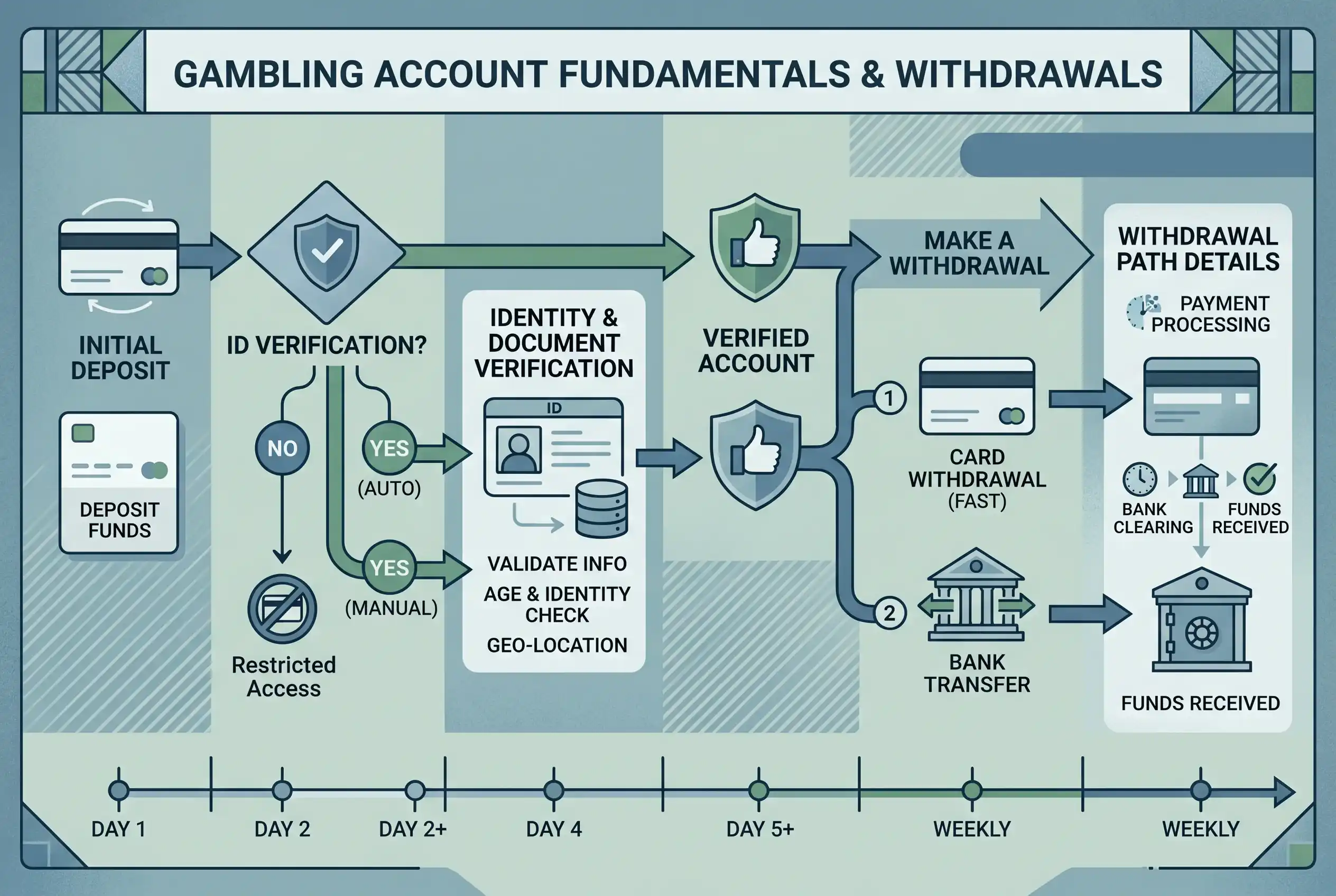
Crypto withdrawals typically clear within 24 hours at the top-tier operators reviewed here. Card and e-wallet cashouts run 24–48 hours. Bank transfers stretch to 48–72 hours or longer, and are subject to UK bank interception risk. Most delays result from KYC verification loops at the first withdrawal — clear KYC early to avoid surprises.
The Bottom Line
Casino sites not registered with GamStop UK 2026 are a specific product for a specific type of player. They are not a scam, and they are not a substitute for the UK-regulated market. They exist because a subset of UK players want higher stake ceilings, faster payouts, larger bonuses, and lighter verification than the UKGC framework now permits. That trade is real, and it comes with real costs: no UK consumer protection, no dispute-resolution recourse, no cross-operator self-exclusion.
The mainstream Curaçao-licensed brands — GoldenBet, DonBet, FreshBet, VeloBet, CosmoBet — are competent operators run by professionals under a regulator that in 2026 finally has teeth. That does not make them equivalent to UKGC casinos. It makes them a different product. Anyone marketing “safer than UK casinos” or “better protected than UKGC” is selling. Anyone claiming they’re uniformly dangerous fraud shops is also selling, just to a different audience.
The honest position is that the non-GamStop segment is a legitimate international gambling market with meaningful player trade-offs. Understand the trade-offs. Read the actual T&Cs, not the marketing copy. Verify licence numbers on the CGA registry. Set operator-level deposit limits regardless of whether you think you’ll need them. And if you self-excluded from UK gambling for a reason, remember what the reason was before you open a new account offshore. The casino will not remember it for you.
Created by the "Casino not on Gamstop" editorial team.