UK Gambling Licence Checker and Official Casino Status
 Available in GB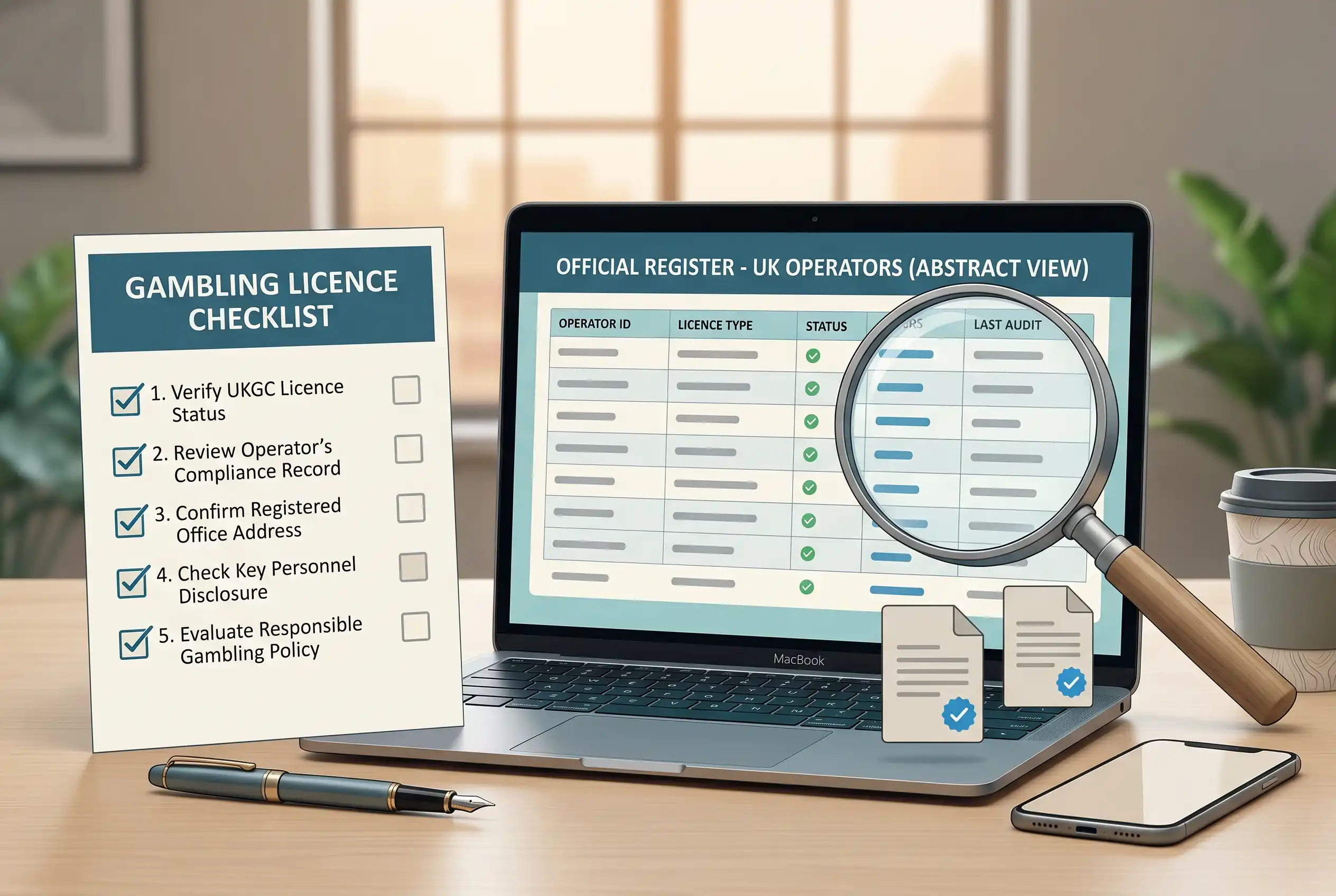
Related checks: full overview, payments and ID checks, bonus and balance terms, ID document and privacy risks, self-exclusion support.
Table of Contents
Key Casino License Details to Verify Before Depositing
The first job is to identify the legal business and check whether the details match the claim being made. The Gambling Commission provides public registers for licensed businesses, regulatory actions and premises. Its full business register supports checks by business name, trading name, domain name or account number. Those details matter because a logo or a sentence in a footer can be copied, shortened or presented without the context a player actually needs.
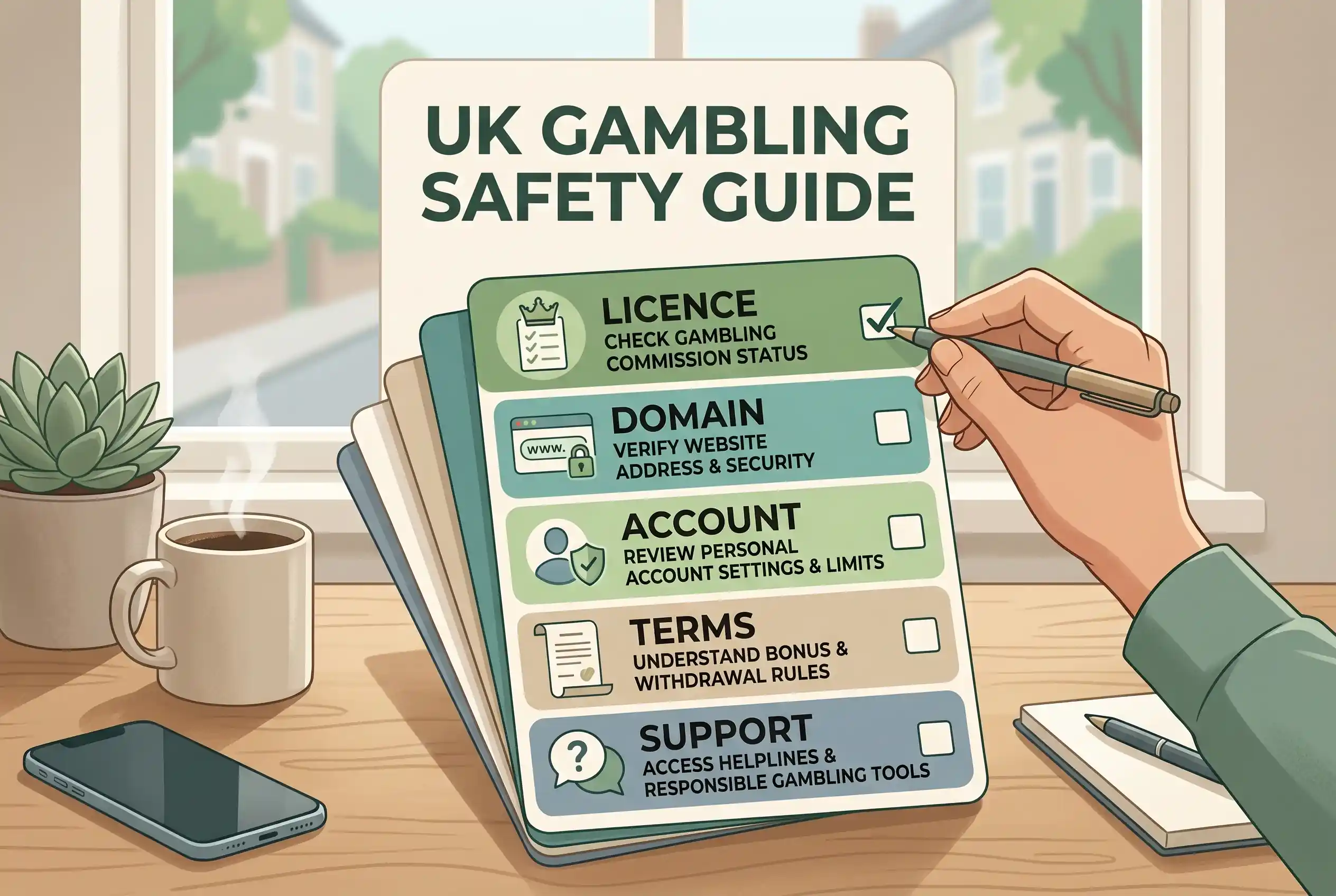
A useful check asks five questions. Who owns or operates the website? Which trading name is being used? Does the domain appear in official information? Does the account number or licence detail match the same business? Does the account-opening information explain terms, fees, money protection, bonuses, complaints and other essentials before you deposit?
If the answer to any of those questions is unclear, treat the claim as unverified. That does not require you to make a legal ruling about the site. It simply means the evidence is not strong enough to rely on for a money decision.
Pre-deposit verification checklist
| What to check | Where to check it | What confirms it | Warning sign |
|---|---|---|---|
| Business name | The website footer, terms page and the Gambling Commission public register | The same business name appears consistently and can be matched to official information | The site gives only a brand name, a logo or a vague company description |
| Trading name | The full business register and the account-opening information | The trading name is connected to the licensed business and the site you are viewing | A familiar-sounding name is used without a clear link to the registered business |
| Domain or account number | The full business register, where the details are available | The domain or account detail matches the site and business claim | The site claims a licence but the domain or account detail cannot be matched |
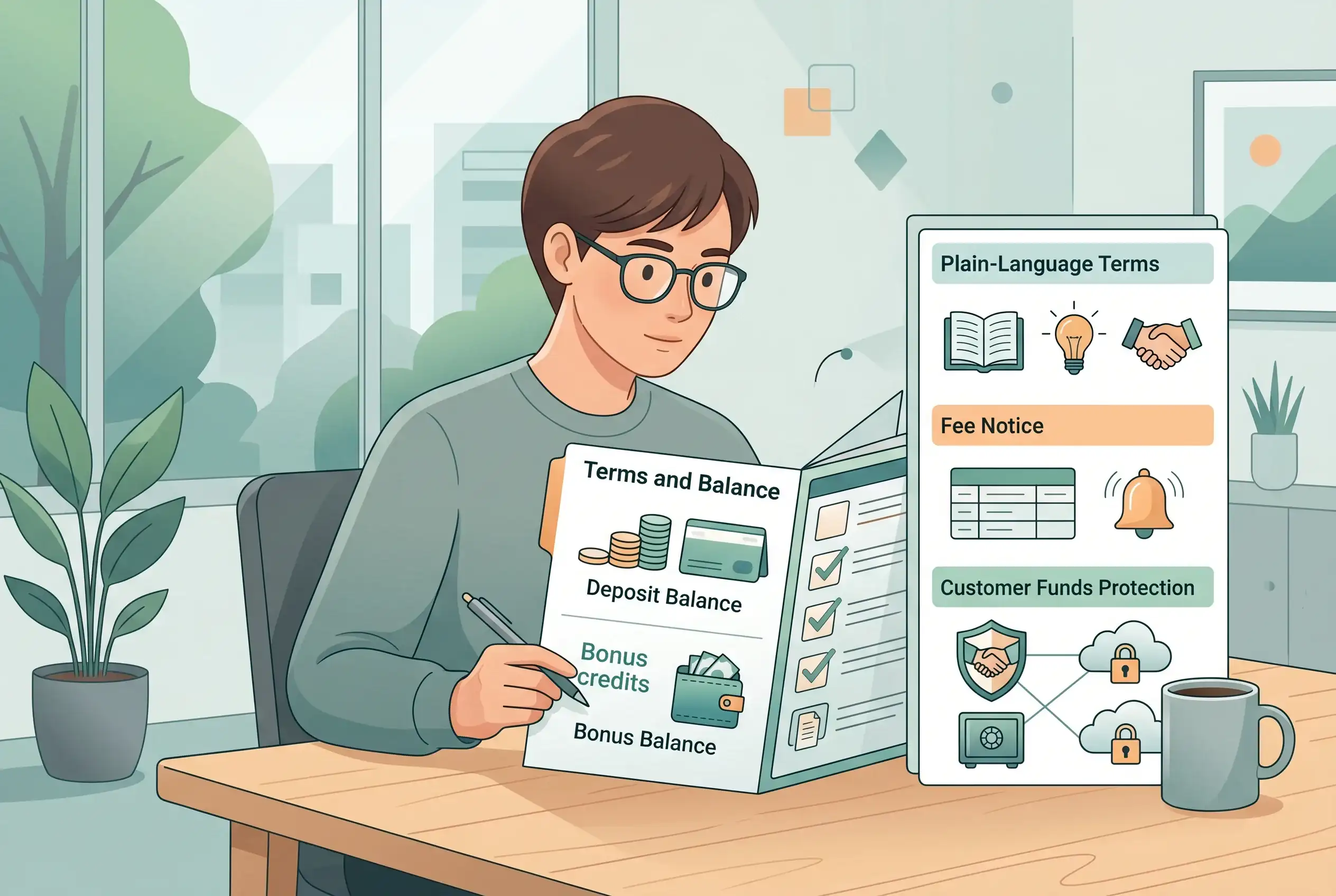
| Terms and account information | Account-opening pages, terms and customer information pages | You can read clear terms, account fees, free-offer rules and withdrawal conditions before depositing | Important terms appear only after signup or are hidden behind vague promotional wording |
| Customer-funds wording | Account information and terms | The site explains how customer funds are treated and protected | The wording promises safety without explaining the level or limits of protection |
| Complaints and dispute route | Terms, complaints page and official account information | You can see how complaints are handled and where unresolved disputes may go | No clear complaint process, no independent route, or only a generic contact form |
The safest decision line is simple: if official evidence is missing, do not treat the claim as verified. A confident marketing sentence is not the same thing as a confirmed business record.
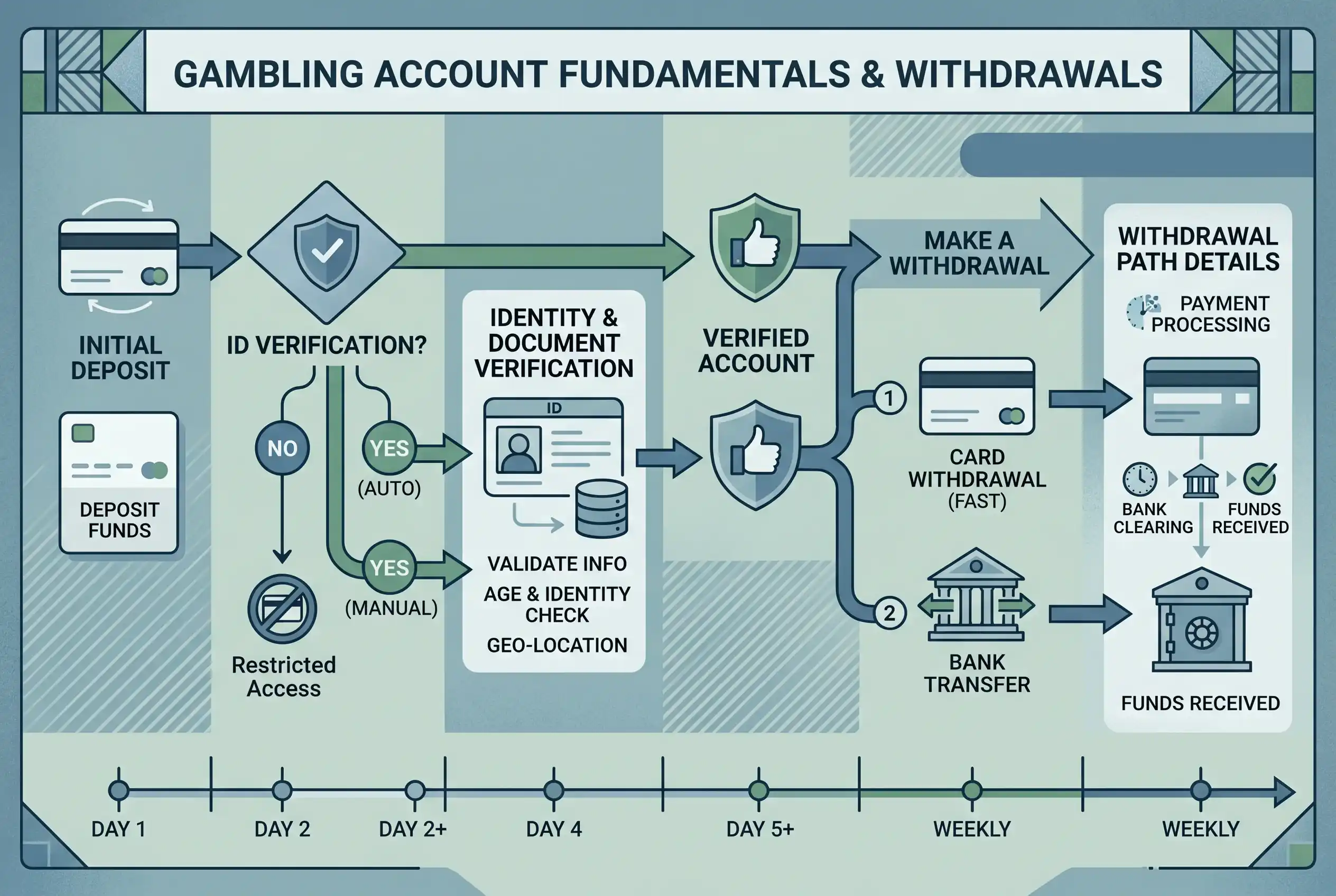
Understanding the operator’s terms is just as important as knowing the rules for payments, ID checks and withdrawals before you commit your funds.
A step-by-step way to run the check
- Collect the claims before you create or fund an account. Note the business name, trading name, domain, licence wording, account number, customer-funds wording and complaints wording. Taking screenshots for your own records can help if details later change.
- Use the Gambling Commission public register. Start with the business name and trading name. If the site provides a domain or account number, check those exact details rather than relying on a similar-looking name.
- Compare like with like. A business may operate more than one brand. The important point is whether the site you are using is clearly tied to the business and account information being presented.
- Read the account-opening information. Gambling companies are expected to provide information about licensed status, account terms, fees, money protection, free offers or bonuses and complaint arrangements. If this information is hard to find, incomplete or contradictory, that is a practical problem even before any dispute begins.
- Separate foreign licence claims from Great Britain protections. Do not assume that a foreign or unsupported licence claim gives the same protection as a confirmed Gambling Commission record. That is not a judgement on every overseas business; it is a warning against treating different evidence as identical.
- Stop when the evidence does not match. The result of a check may be “not verified”. That is a valid result. You do not need to keep searching for a more favourable reading before deciding not to deposit.
How trust claims commonly fail
Trust claims usually fail in ordinary, practical ways. The site may show a licence badge without naming the business clearly. The account terms may use one name, the payment page another and the footer a third. The domain may not match the official record the site points to. The terms may be readable but still omit the points that matter most to a customer, such as fees, withdrawal restrictions, customer-funds wording or the complaints route.
Another weak pattern is the “available because it is outside normal checks” pitch. If a site presents being outside a protection system as the main attraction, that should make the verification work stricter, not looser. You are being asked to trust the operator precisely when some protections may not apply in the way you expect.
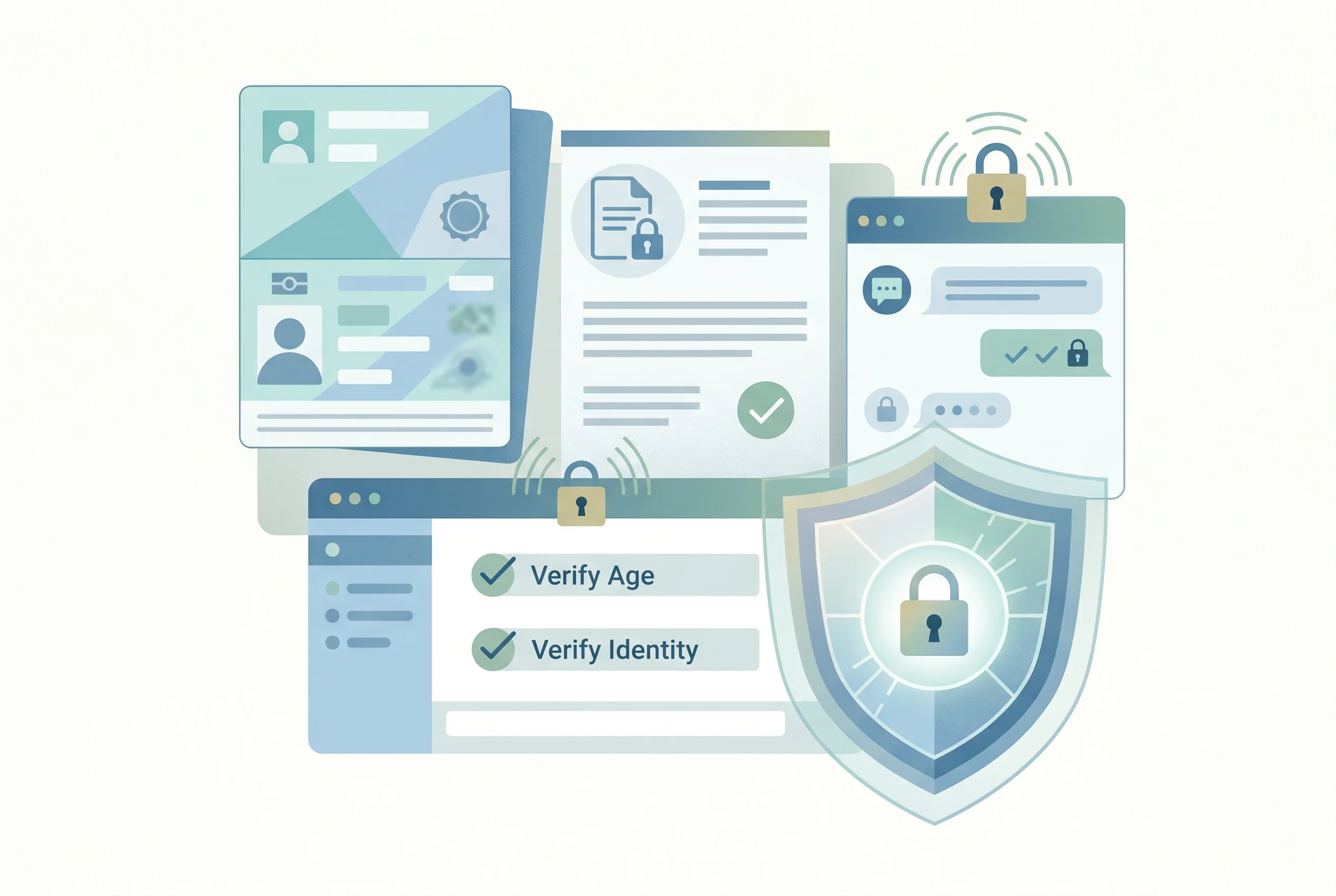
The same caution applies to phrases such as “no verification”, “instant access” or “no restrictions”. For a gambling account, identity, age, payment and financial checks can be connected to player protection, crime prevention and account safety. A claim that removes all friction may sound convenient, but it can also mean you have fewer ways to prove what happened if a problem starts.
When the issue is GAMSTOP or a gambling block
If you are checking a site because you are self-excluded, blocked by your bank or trying to continue gambling during a cooling-off period, this page is not the right next step. The safer route is to treat that pressure as a protection issue. Read the self-exclusion and support guide rather than looking for access routes.
GAMSTOP is about online accounts with gambling companies licensed in Great Britain. A site outside that system should not be framed as a solution to a self-exclusion decision. If the urge to gamble feels urgent, a verification checklist will not solve the real problem; support, blocks and a pause are more useful.
What this check does not decide
This page does not say that every site outside the Gambling Commission register is illegal, nor does it say that every registered-looking claim is safe. It gives you a minimum evidence test before any deposit decision. It also keeps separate questions separate. Payment methods, ID requests and withdrawal delays are covered in the payments and ID guide. Bonus balances and customer-funds wording are covered in the terms and balance guide. Data and document-sharing risks are covered in the privacy and ID guide.
If you already have a dispute, collect the evidence you have and move to the complaints and dispute route. A pre-deposit check is most useful before money leaves your account. After a dispute starts, records, dates, account messages and the business complaint procedure become more important.
Official pages worth using during the check
- Gambling Commission public registers for licensed businesses, regulatory actions and premises.
- Full business register for searches by business name, trading name, domain name or account number.
- Opening accounts for the information a customer should be able to see when opening an account.
- Account information companies must give you for terms, controls and complaint information.
Checks people often miss
Is a licence logo enough?
No. Use it only as a starting point. The business name, trading name, domain or account number should be checked against official information where possible.
What if the website says it is licensed overseas?
Treat that as a separate claim. Do not assume it gives the same protections as a confirmed Gambling Commission record for Great Britain-facing online gambling.
Should I deposit a small amount to test withdrawals?
A test deposit is still a deposit. If basic evidence is missing before funding an account, the safer conclusion is that the claim has not been verified.
For a comprehensive overview of safe gambling practices, always consult our main independent UK casino guide.
Created by the "Casino not on Gamstop" editorial team.